
How to calculate the break-even point for a rental property
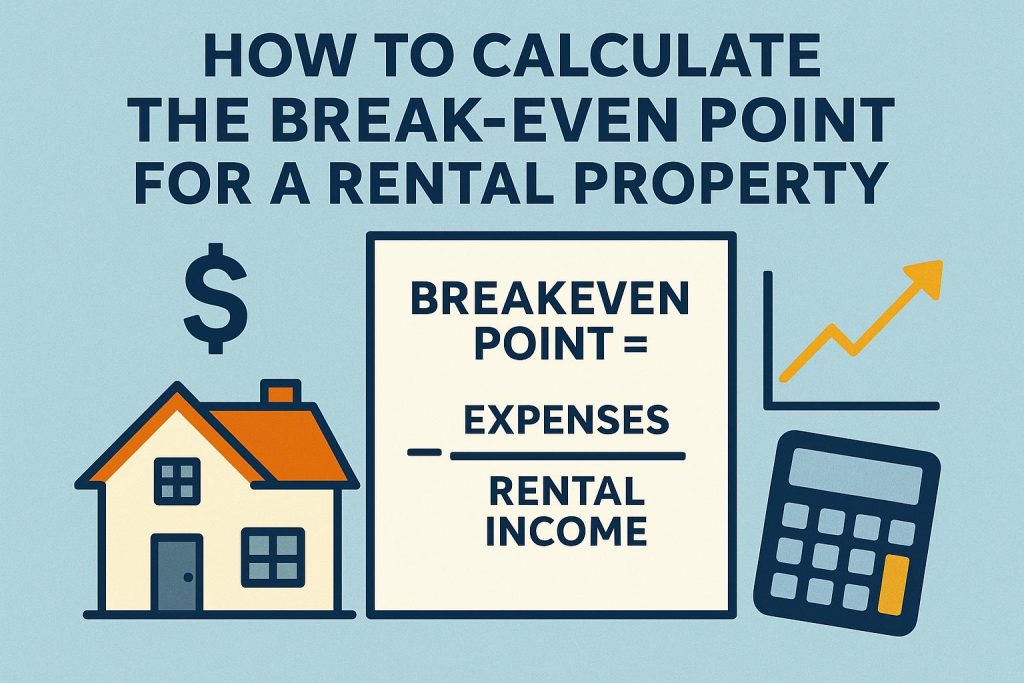
Understanding the Break-Even Point
In the realm of real estate investing, the concept of the break-even point is a fundamental one. It signifies the moment when your property’s total income either matches or exceeds its total expenses. This calculation serves as a vital tool for investors, enabling them to pinpoint when a rental property will begin to generate profit. Understanding the break-even point is not merely an exercise in mathematics; it is an essential component of strategic financial planning and informed investment decision-making in real estate.
Key Factors in Calculation
Accurately determining the break-even point of a rental property entails evaluating several critical factors. Each of these components plays a pivotal role in ensuring that the calculation reflects the true financial health of the investment.
Total Monthly Income: At the heart of any income-producing property is the rent collected from tenants. However, achieving a precise calculation requires accounting for potential vacancies. These vacancies directly impact the overall income, and failing to consider them can lead to overly optimistic projections.
Total Monthly Expenses: A comprehensive understanding of monthly expenses is crucial to the break-even analysis. These expenses typically encompass mortgage payments, property taxes, insurance, maintenance costs, and property management fees. Each of these costs can fluctuate over time, and an in-depth understanding allows investors to make more accurate predictions and avoid financial pitfalls.
Initial Investment Costs: The initial costs associated with acquiring a property cannot be overlooked. This category includes the down payment and closing costs incurred during the purchase process. Additionally, if substantial renovations were necessary before the property could be rented, these should be factored into the initial investment as well.
Break-Even Point Formula
The break-even point, calculated in months, reveals when an investor can expect their initial investment to be paid off. This calculation is made using a straightforward formula:
Break-Even Point (Months) = Initial Investment / (Monthly Income - Monthly Expenses)
The essence of this formula lies in its ability to determine how many months it will take for a property to “repay” the initial investment. The assumption here is the stability of income and expenses over time.
Example Calculation
To offer a clearer picture, let’s delve into a hypothetical scenario involving a rental property:
Initial Investment: Consider an initial outlay of $40,000, encompassing both the down payment and the closing costs.
Monthly Income: After accounting for potential vacancies, the property generates a monthly income of $2,000 from rent.
Monthly Expenses: The total expenses, including the mortgage, property taxes, property management fees, and other costs, amount to $1,500 per month.
Applying these figures to the break-even formula yields:
Break-Even Point (Months) = $40,000 / ($2,000 - $1,500) = 80 months
Thus, in this scenario, it will take approximately 80 months for the property to reach its break-even point, meaning the initial investment will be effectively “paid off” in just over six and a half years.
Considerations and Adjustments
In the ever-fluctuating world of real estate, properties are not immune to changing market conditions. As such, it is essential to factor in potential variations in both rental income and expenses. Projected rent increases can contribute to a shorter break-even period, while unexpected costs can extend it. Consequently, having a reserve fund is advisable, providing a financial buffer for unforeseen expenses like significant repairs or legal fees.
Investors can also benefit from exploring various real estate strategies and utilizing detailed analysis tools. Platforms such as RealEstate.com offer a wealth of resources, enabling more in-depth insights into real estate investment strategies.
Regularly reviewing a property’s financial performance goes hand in hand with understanding these dynamics, allowing investors to make more precise investment choices and implement effective property management strategies. By maintaining a keen awareness of market conditions and adjusting financial plans accordingly, investors can navigate the complexities of real estate investment with greater confidence and clarity.
Conclusion
In conclusion, the break-even point is an indispensable tool for real estate investors, offering insights into when a property will become profitable. By meticulously analyzing total monthly income, expenses, and initial investments, investors can make informed decisions to guide their properties toward profitability. As market conditions evolve, continuous assessment and adaptation ensure that investment strategies remain aligned with financial goals. By embracing these principles, real estate investors can optimize their portfolios and make well-informed investment decisions for long-term financial success.